Top Lenses
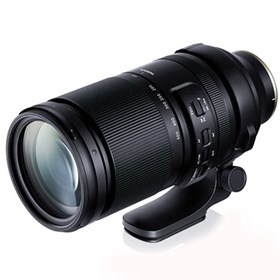
Tamron 18-270mm VC
£349.00
Now even smaller, lighter and more compact. Equipped with fast and silent PZD (Piezo Drive) focusing and an impressive VC images stabiliser.
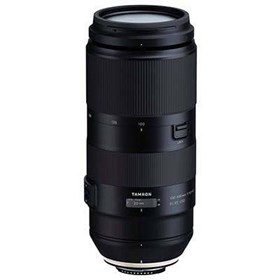
Tamron 70-300mm VC
£289.00
This combination of best in class image resolution, Ultrasonic Silent Drive and Vibration Compensation is a new achievement of Tamron technology.
Tamron 18-200mm XR
£159.00
Providing APS-C DSLR users the versatility of a true wide to ultra-tele zoom featuring XR glass in an amazingly compact, award winning design.
Tamron Camera Lenses
Tamron All-in-One Zoom
Achieve the convenience of wide-angle through to telephoto focal lengths, all in one versatile, lightweight lens.
Tamron High Speed Zoom
With a maximum aperture of f/2.8, these lenses offer outstanding image quality and pin sharp definition.
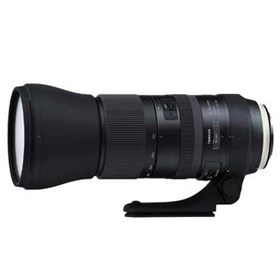
Tamron Telephoto Lenses
These lenses give you the ability to capture distant subjects
and create dramatic
close-ups.
Tamron Lenses
Ultra Wide Angle Lens
Create stunning images that have a dramatically different perspective by using an ultra-wide-angle lens.
Tamron 10-24mm f3.5-4.5 Di-II
£369.00 More Tamron Lenses
We've got even more
Tamron lenses, available in
the following mounts:
Tamron Focal Length Comparison Chart
Tamron Lens Glossary
Tamron Lens Abbreviation Definitions
- AD
- Lens technology created to help control chromatic aberrations that would otherwise degrade image contrast and sharpness. Anomalous Dispersion glass is a special optical glass that delivers an abnormally large partial dispersion ratio (amount of dispersion at a given wavelength range within visible light) relative to a specific wavelength zone.
- ASL (Aspherical)
- An aspheric lens or asphere is a lens whose surfaces have a profile that is neither a portion of a sphere nor of a circular cylinder. In photography, a lens assembly that includes an aspheric element is often called an aspherical lens.
- Di (Digitally Integrated)
- Is the designation Tamron puts on lenses featuring optical systems designed to meet the performance characteristics of digital SLR cameras as well as film cameras. These lenses may be used on cameras with full format (FF) or APS-C sensors (with a crop factor relative to the camera).
- Di-II
- Lenses are designed for exclusive use on digital cameras with smaller-size imagers (also known as APS-C sensors). These lenses are not designed for conventional cameras and digital cameras with image sensors larger than 24mm x 16mm.
- IF (Internal Focusing)
- All focusing occurs within the lens, i.e. the lens will not change size as it zooms. Usually a desirable function of a lens.
- LD (Low Dispersion)
- Lens technology created to help control chromatic aberrations that would otherwise degrade image contrast and sharpness. LD elements are made from special glass materials with extremely low dispersion indices (characteristics that separate or refract a ray of light into rainbow colours) that effectively compensate for chromatic aberration that is particularly a problem at the telephoto end.
- SP (Super Performance)
- Professional class lens; currently the best lenses made by Tamron for the consumer market.
- XR (Extra Refractive Index Glass)
- Extra Refractive Glass having a refractive index of more than 1.69 is called extra refractive or high index glass. This numerical expression compares the speed of light in a transparent medium, like glass, with the speed of light in air. The higher the index number, the thinner a given element will be.
- VC (Vibration Compensation)
- In lens stabilisation - The proprietary VC (Vibration Compensation) mechanism features a triaxial configuration using three pairs of driving coils and slide balls around the compensator group of the lens' optical system. The lens incorporates a highly accurate gyro sensor for detecting hand-shake, and offers comfortable anti-vibration effects.
Tamron Reviews
Wex Photographic features tests & reviews by independent expert photographers and our staff. Here are a few of our latest Tamron Lens reviews:
- by Mark Stephenson "Tamron have given photographers another choice to consider when looking at a standard zoom. But can its specifications on paper live up to the hype and be a viable alternative to the industry standard 24-70mm zooms out there whilst maintaining a similar size and weight and all at a very competitive price point?"
- by Rob Spray "So is it the perfect travel lens? It certain crams in all you’d normally need – with some icing on top as it has more than excellent reach – 300mm equivalent used to be ‘long’ so the 405mm the Tamron offers is a very useful bonus."
- by Warehouse Staff "…it turns out that the humble macro lens doesn’t have to be reserved for occasions when you’re knee deep in swamp water and face to face with a frog, or on your belly in a meadow chasing a ladybird through the grass…"
- by Warehouse Staff "Tamron have added a twist to their latest macro lens: A fast f2.0 maximum aperture, which is quite unusual compared to competitors’ f2.8 offering. What’s so great about the f2.0 aperture? It allows you to achieve an extremely shallow depth of field, which is perfect for selectively focusing on part of your subject."
- by Warehouse Staff "In the words of a colleague here at Wex Photographic, 'Tamron have announced some very sexy lenses'. The first of which is the Tamron AF SP 10-24mm f3.5-4.5 Di II LD Aspherical (IF) lens. The high-performance, ultra wide-angle zoom lens with an unprecedented focal length range has been designed…"